Cobbled Streets, Cream Teas, and That Proper Market Town Magic
6 July 2026
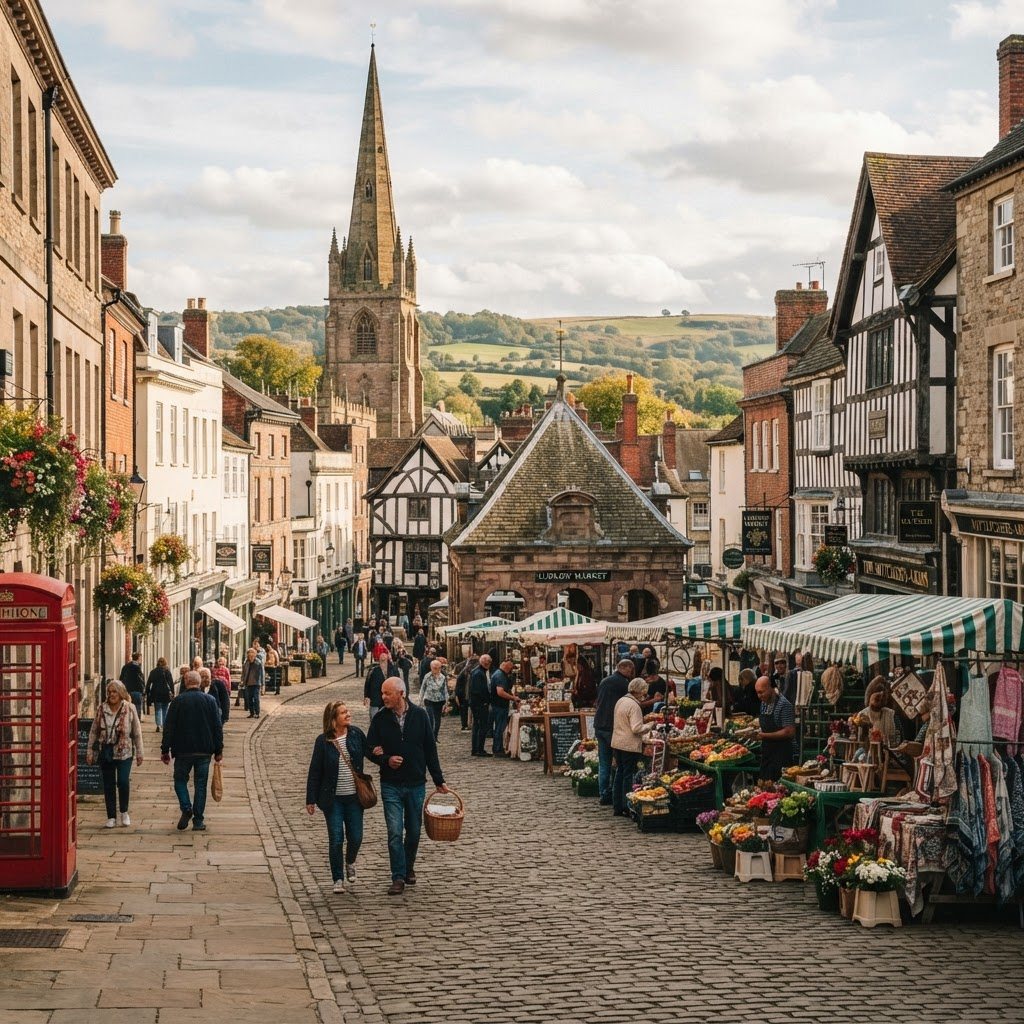
There's something about a British market town that just gets under your skin — the kind of place where you pop in for a coffee and accidentally stay all day. I've been chasing that feeling across the Cotswolds, Yorkshire, and beyond, and I still can't get enough.
I'll be honest — I didn't used to get the hype.
Growing up near a fairly nondescript high street, the phrase "market town" didn't exactly set my heart racing. It sounded like somewhere your gran went to buy Wraps and a crossword magazine. But then I visited Stow-on-the-Wold on a whim one October morning, the air sharp and golden, and something clicked. Hard.
It was the sort of day where the light makes everything look like it's been filmed through a vintage filter. The market square was quiet, just a few stalls — someone selling chutneys, someone else with a van full of proper local apples, varieties I hadn't seen since I was a kid. I bought a paper bag of Russets, a chunk of Snowden cheese, and wandered into a tiny bookshop where the owner actually asked me what I'd enjoyed reading lately instead of just pointing me to the bestseller table.
That's the thing about British market towns. They haven't quite been smoothed over by the same chain-store sameness that's flattened so many other places. There's a texture to them. A rhythm.
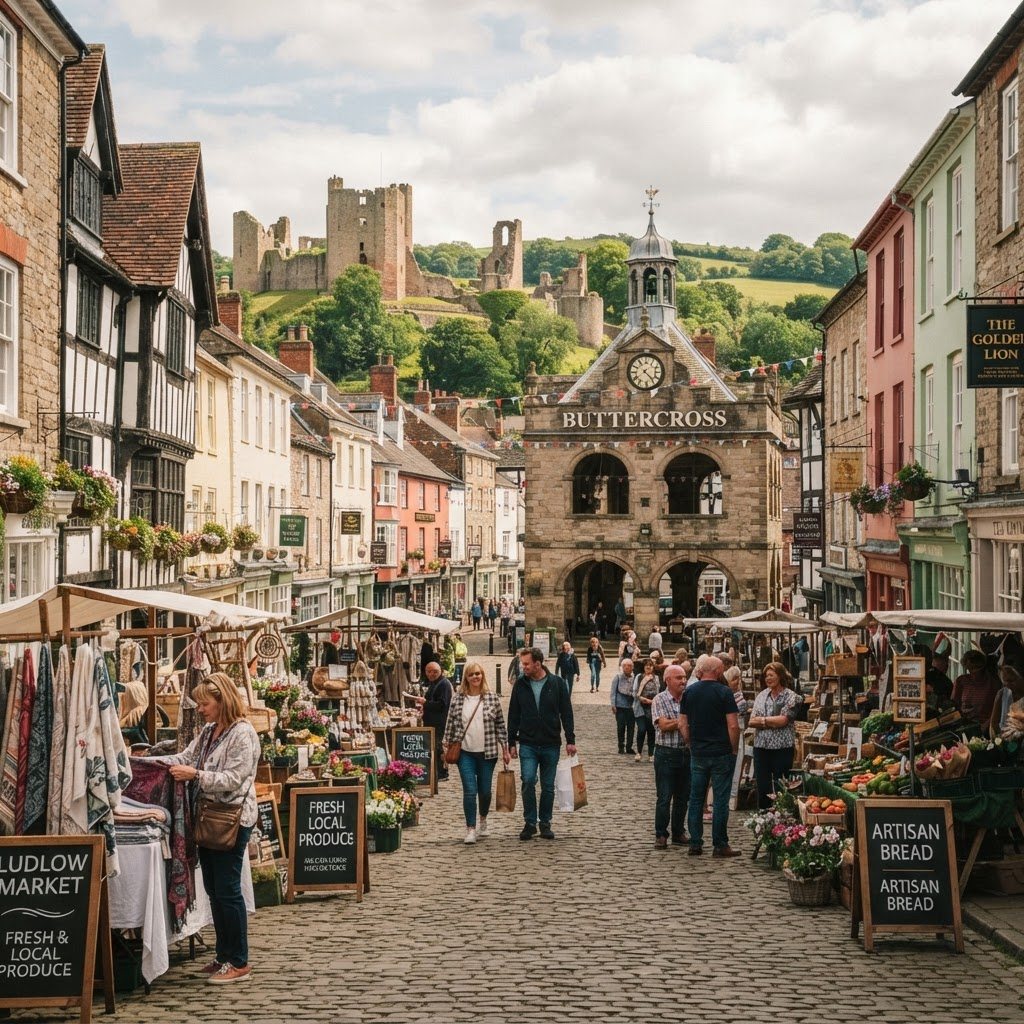
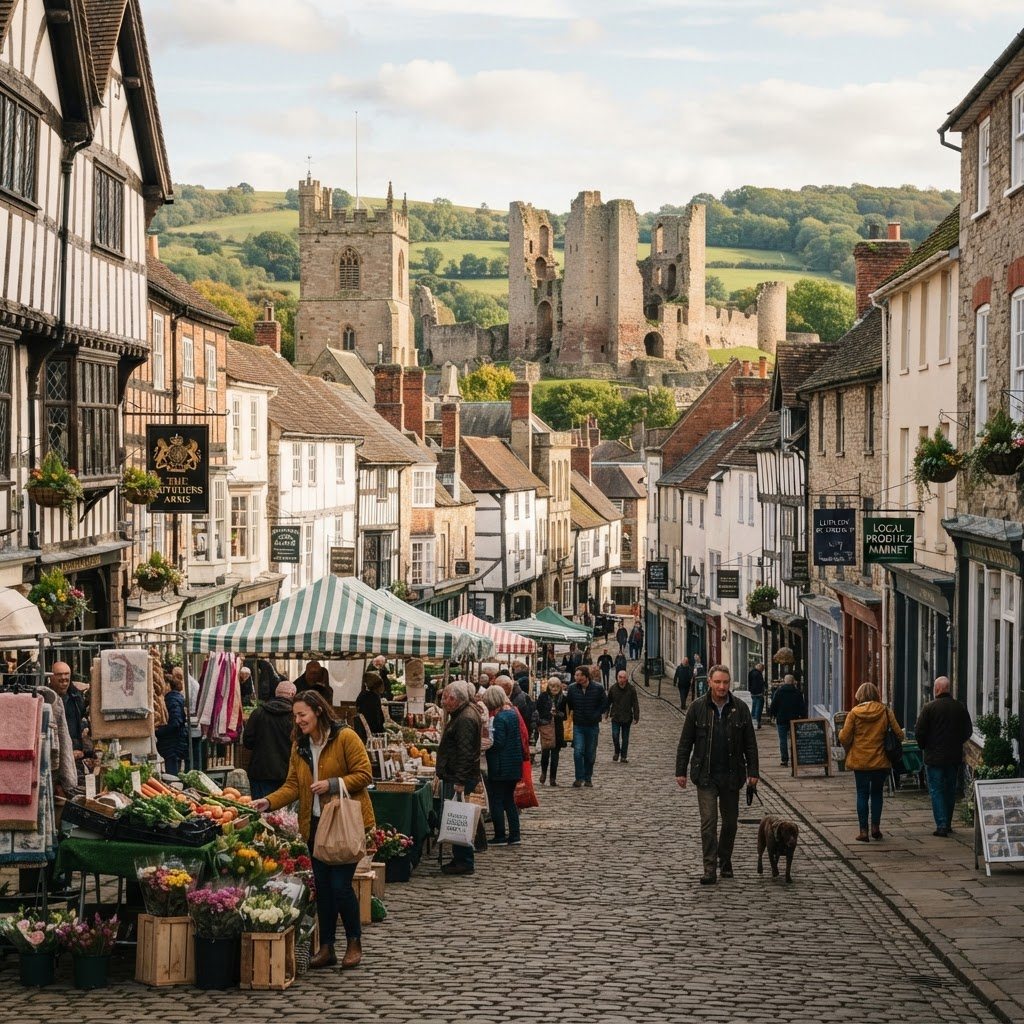
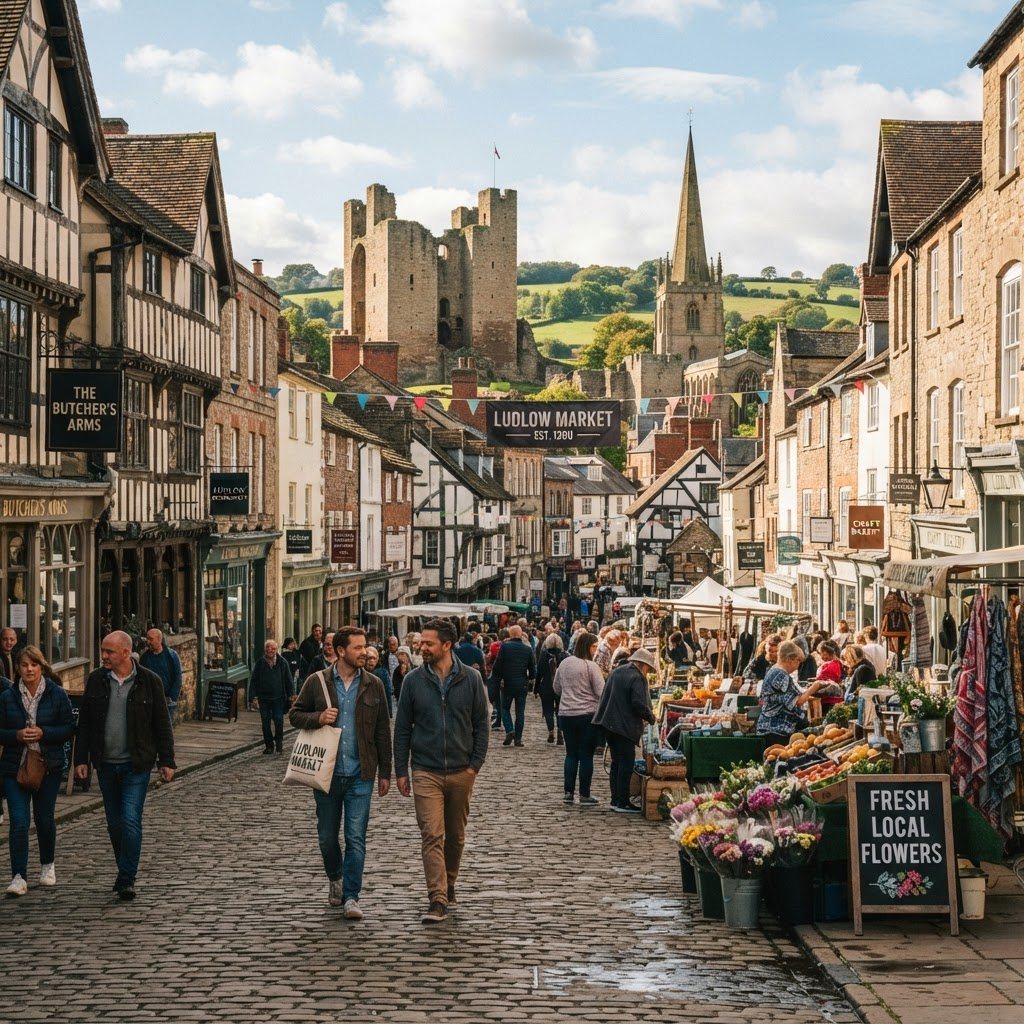
Most still hold their traditional market days — and if you're planning a visit, this is my number one tip: find out which day that is and go then. It changes everything. Market day is when the town breathes. Stalls spill out across the square, old boys catch up over cups of tea from a van, and there's this lovely low hum of proper community. Not curated. Not performed. Just… happening.
Ludlow on a Thursday. Bakewell on a Monday. Alnwick on a Saturday. Each one has its own personality, but they share a kind of bones-deep pride that I find genuinely moving.
And the architecture — God, the architecture. You don't realise how starved you are of beauty until you've walked down a street where every building is a slightly different shade of honey-coloured stone, where the pub has a sign that's been there since 1730, where there's a church with a lychgate you actually have to stop and look at. I caught myself photographing a drainpipe once. A drainpipe. It was attached to a 16th-century timber-framed cottage, but still. My husband still brings it up.
Food is another reason I keep going back. Market towns are where you'll find the kind of independent butchers, bakeries, and delis that cities pretend to have but never quite pull off. I'm talking sourdough baked at 5am two doors down. Pies with a pastry lid you could weep over. A little chocolate shop where the woman behind the counter knows exactly which percentage you like because she remembers from last time.
If you're doing a market town day trip properly, arrive early (before 10 if you can), park on the outskirts, and walk in. The approach matters. You want to come in past the old stone walls, hear the church clock, smell someone's log fire. It sets the whole tone.
Then just wander. Don't over-plan it. The best market town moments are the accidental ones — the courtyard you didn't know was there, the tiny museum staffed by a retired history teacher who could talk for England, the second-hand bookshop with a cat asleep on the Ordnance Survey shelf.
I've been to dozens of these places now, and I still feel like I've barely scratched the surface. There's always another one. Another market square. Another cream tea I didn't need but absolutely had to have.
Honestly, I think that's the charm. They're not trying to impress you. They're just going about their day, and if you happen to wander in with an empty stomach and a bit of curiosity, they'll quietly make it one of the best days you've had in ages.
No ticket required. No itinerary. Just turn up and let the place do its thing.